erapickleball.com pickleball training: Smart Practice Techniques
The sun is low on a winter morning, light slicing across the court as I step onto the lines with a bag full of gear that looks more like a sports scientist’s kit than a weekend warrior’s. Over the years teaching eras of players, I’ve learned that the difference between a good practice session and a transformative one often comes down to intention. It’s not merely about hitting more balls or chasing faster spins. It’s about designing practice that mirrors the real demands of a match, building consistency without sacrificing pace, and creating a rhythm that makes you feel alive on the court rather than exhausted by it. That is the core of era pickleball training, a philosophy that blends structured skill work with the adaptability and curiosity that makes pickleball incredibly rewarding.
If you’ve ever walked into a gym or a pickleball facility and watched players chase the ball with blind drive, you know the problem. They’re busy, but not precise. They train for the wrong outcomes, or they train the right outcomes in the wrong order. The most successful athletes I’ve coached have a bias for how they practice as much as what they practice. They understand that the brain codes the body’s movements through repetition, but it codes the context through variation. Smart practice is not about piling drills into a single hour; it’s about layering intentional constraints, feedback loops, and micro-successes that compound into real match-day competence.
In eras past, training tended to drift toward ritual routines—same warmup, same placements, the same pushes through a predictable script. Today, with modern drills and a more nuanced understanding of motor learning, you can craft a practice that respects your current level while nudging you toward the next. The approach I advocate for in erapickleball.com pickleball classes blends quick, high-uncertainty exchanges with deliberate, low-uncertainty repetition. The goal is to improve ball control, positioning, decision-making, and stamina in a way that translates when the scoreboard is ticking and the court is filled with pressure.
What follows is not a one-size-fits-all regimen. It’s a lens through which to view your practice time, a way to measure progress and course-correct when you’re spinning your wheels. You’ll find actionable ideas you can apply in a single session or over the course of a week. You’ll encounter real-world nuances that arise when you’re coaching or being coached, the subtle friction between technique and strategy, the way fatigue reshapes choices, and the surprising places where you can squeeze improvement from constraints instead of fight them.
The backbone of smart practice begins with three questions: What is the skill you want to improve, and why does that skill matter in real games? How will you measure progress without becoming obsessive about numbers? And what small, repeatable actions can you practice daily that will stack toward bigger outcomes? Answering these questions honestly helps you design sessions that feel meaningful, not merely mechanical. It also helps you separate genuine improvement from the illusion of improvement that comes with more hours spent on the court.
If you want a practical starting point, begin with a short diagnostic session. Hit a few balls with a patient partner or a wall, and notice where your body tenses, where your eyes focus, and how your paddle face behaves on contact. Then map that observation to a single improvement target for the day. It could be something as precise as “keep the paddle face closed on backhand drives” or as expansive as “improve your transition from defense to offense on midcourt drives.” The aim is to leave the court with one clear takeaway and a plan to practice it with consistency. The best moments in these sessions arrive not when you hit a perfect shot, but when you recover from a poor one with a conscious correction and a reset.
In the realm of era pickleball training, there is a subtle but crucial distinction between practicing skills in isolation and practicing them in the flow of a rally. Isolating a skill—say, the backhand drive or the dink—allows you to engrave a repeatable motor pattern. But the real test comes when you apply that skill under the pressure of a live exchange, where you anticipate, read, and adjust on the fly. My own coaching work has shown time and again that players who spend time building a library of decision points, not just perfected strokes, tend to perform better late in games. They move with purpose, knowing when to pivot, when to take a pace up, and when to reset and extend a point to invite a more favorable exchange.
One practical framework I use in coaching clinics at Era Pickleball pickleball training facilities centers on variable practice, variable intention, and reflective repetition. Variable practice means you don’t practice the same shot from the same position repeatedly. Instead, you shuffle through different zones, different speeds, and different ball spins. The brain loves variation; it primes itself to recognize a broad range of cues and adjust its responses. Variable intention means you set a different purpose for each segment of a drill. Perhaps you’re focusing on footwork for three minutes, shifting to watching contact point for two minutes, and then to shot selection for two minutes more. It sounds simple, but the effect is cumulative. Reflective repetition closes the loop. After a drill, you pause to ask what happened, why it happened, and what you’ll adjust next. This reflection turns practice into a learning cycle rather than a performance sprint.
To bring these ideas to life, you can adopt a flexible routine that suits your level, goals, and available time. The key is to maintain momentum while pushing your boundaries in purposeful ways. A realistic weekly pattern balances high-intensity, technique-centered sessions with lower-intensity, decision-focused practice. The balance keeps you from burning out and also prevents the brain from tuning out. It’s a rhythm built on science, yes, but also on the kind of real-world playing experience you bring to every match.
Let me offer a handful of concrete examples drawn from my years teaching and coaching pickleball. These indoor pickleball courts are not magic bullets. They are reliable ways to cultivate steadier hands, sharper eyes, and more confident decision-making when the court heats up.
First, embrace the concept of micro-goals within each rally. Instead of chasing a perfect shot every time, set a tiny objective for the next sequence. For instance, in a dink rally, your micro-goal could be to maintain a low paddle path and keep your weight over your back foot until the ball bounces twice on your side of the net. Once you achieve that, shift the target to re-establishing net pressure or guiding the ball deep to push your opponent away from their preferred angles. These micro-goals sound modest, but they redefine the end of a rally from winning the point to executing a controlled, repeatable process. The shift is profound because it transfers the pressure from the scoreboard to the technique and decision-making you’re practicing.
Second, capitalize on the dynamic warmup that doubles as skill work. A lot of players treat warmups as a routine, a way to shake out the nerves and get blood flowing. In Era Pickleball pickleball classes, I urge you to turn warmups into a sequence that previews the day’s targets. Start with a two-ball warmup that forces you to read spin and frame the paddle precisely. Move into a short, controlled cross-court exchange that demands accurate placement and quick footwork. Then finish with a few transition drills where you step into your shots from backhand to forehand with a deliberate pause to reset your balance. The point is not simply to get loose; it is to prime your brain for the specific decisions you will face in the session.
Third, borrow a page from the high-performance playbook and sequence your practice to mirror match pressure. You don’t need a tournament to simulate pressure. Create a small rule set in practice: if you miss a target, you perform a quick reset drill, if you land a target, you gain a small recovery advantage in the next rally. The rules add tension in a controlled way. They also teach you to manage emotions and conserve energy when you’re under stress. This is where a lot of players miss a trick. They train for technique in isolation, but they forget to train for pressure, pace, and practical decision-making under fatigue. The best players cultivate adaptability as a skill, not merely as a consequence of natural talent.
Fourth, integrate feedback loops that feel lightweight but are potent. Video is useful, but you don’t need to become a cinephile to extract value. A quick glance after a drill can reveal misreads in your footwork or a subtle misalignment in your paddle path. If you can partner with someone who can offer honest, concise feedback, you can accelerate your learning curve. In my era pickleball training programs, I encourage players to record a few seconds after each drill and annotate what they noticed about contact timing, paddle orientation, and body posture. The cognitive load should stay manageable; you’re not building a textbook, you’re refining instincts.
Fifth, practice with a clear, scalable progression. If you identify a core weakness, draft a plan to address it across three weeks worth of sessions. Week one might focus on stabilizing your balance and getting a consistent contact point. Week two could push you to sustain that contact while adding a slightly more aggressive shot choice. Week three could test your ability to apply the improvement under pressure by replacing a portion of live rallies with controlled, goal-oriented exchanges. The progression should feel logical, not punitive. You want the sense that every practice component serves a practical end that you can see in your results on the court.
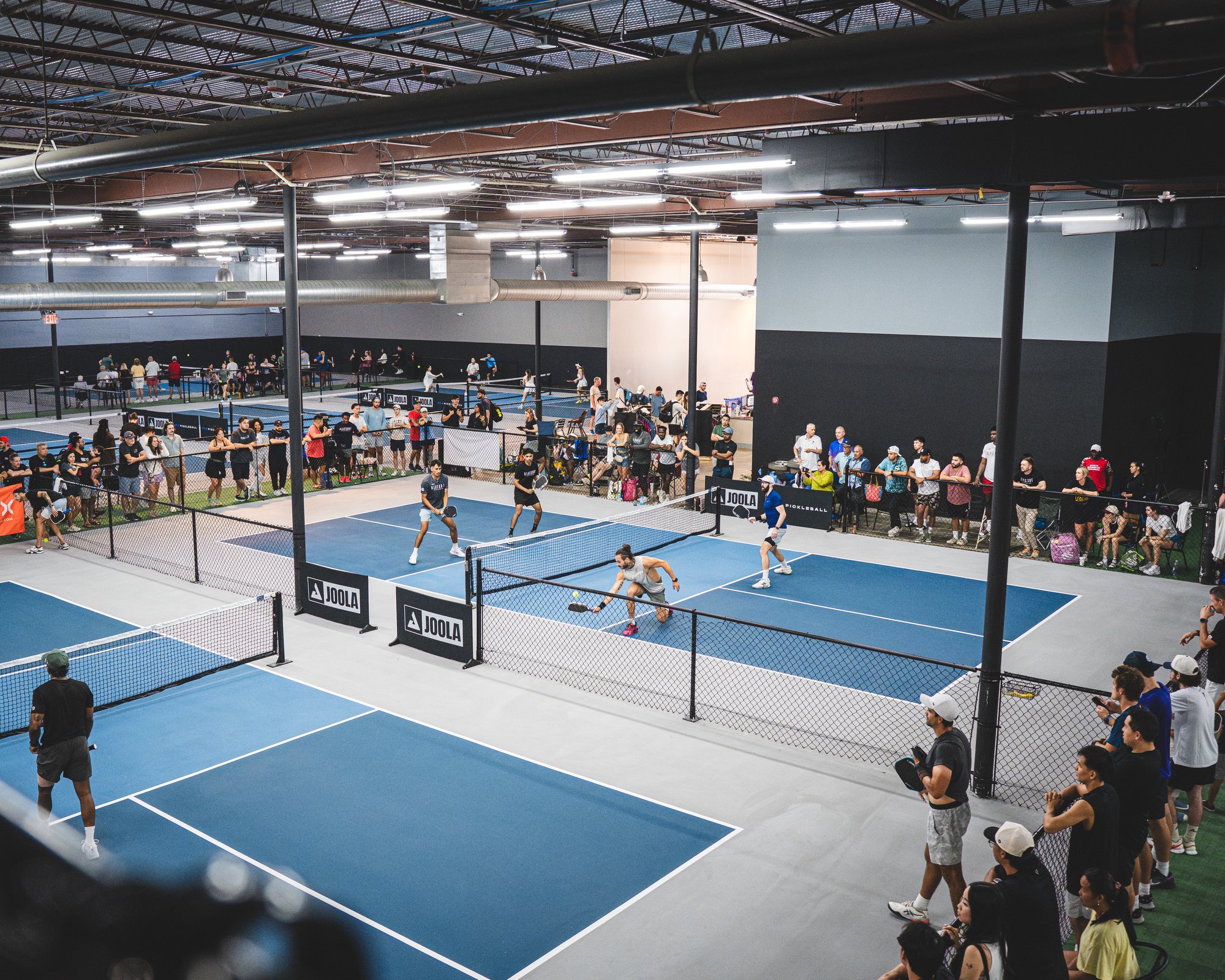
For players who are curious about the practical backdrop of coaching and training in the modern pickleball ecosystem, there is a quiet but meaningful shift in how we talk about improvement. The old model assumed a direct line from practice to competition, a straight shot from drill mastery to match wins. The new model acknowledges that improvement is a tapestry of small, interconnected decisions. You become better not only because you refine a particular stroke, but because you learn to organize your movements, manage your energy, and make smarter choices when the court becomes crowded with opponents and uncertainty.
Smart practice is also about recognizing edge cases, the moments when your routine begins to crumble. You might be the kind of player who throws the paddle a little when balance is compromised, or the kind who freezes when a dink lands too close to your line. These traps are not failures; they are signals. They tell you where reinforcement is needed. In era pickleball training, we frame those signals as opportunities—a chance to adjust your stance, reorient your hips, or alter your paddle angle before contact. The more you treat missteps as data, the less you fear them, and the more you learn to recover quickly.
If you’re ready to translate these ideas into a living practice routine, you can structure a week that aligns with a typical work schedule and still leaves room for growth. Start with two high-focus sessions: one technique-centred, one decision-centred. The technique session isolates a core stroke or a group of related motions, with a cadence designed to engrain correct mechanics. The decision session places those mechanics in the context of rallying with a willing partner or a trainer who can simulate varied responses. The middle of the week can be lighter—short, crisp sessions that emphasize guard against complacency and keep your reflexes sharp. The weekend can be a longer, mixed session that blends all the elements, with a few high-intensity drills followed by slower, more deliberate practice that consolidates what you’ve learned.
In the long run, the promise of era pickleball training lies in your ability to personalize the approach while remaining faithful to core principles. There is no universal formula for success, just a shared vocabulary about how to improve. The vocabulary includes intention, feedback, and progression. It includes the willingness to experiment, the honesty to admit what isn’t working, and the patience to allow improvements to reveal themselves over time. The sweet spot sits at the intersection of technique and strategy, where precise contact points meet smart shot selection, and where your movement carries you more efficiently toward the ball instead of chasing it with brute force.
The practice routines that endure in pickleball are not the ones that burn brightest for an hour but the ones that glow a little every day. The habit forms of sustainable improvement involve tiny, repeatable decisions that you can carry into a match without thinking about them. It’s the same around the net, where a single inch of better positioning compounds into a longer, more controllable rally. It’s the small adjustments that matter the most: staying light on your feet, keeping your eyes on the contact point rather than the paddle, and maintaining a quiet, focused breathing pattern that prevents tension from hijacking your shot.
As you pursue better training through era pickleball classes and pickleball coaching, you’ll notice a few boundary conditions worth acknowledging. Some players respond to high-volume, repetitive targets with a surge of confidence, while others grow better in short, intense bursts that feel like short sprints. Temperature, court surface, and even the time of day can shift how a drill lands. The best coaches adjust on the fly, selecting drills that suit the moment rather than sticking to a rigid blueprint. This flexibility is not weakness; it is the mark of experience and the willingness to meet players where they are.
In practice, you’ll often see the same fundamental ideas expressed through different drills across training sessions. That resonance—seeing a concept appear in multiple contexts—creates a robust understanding. For example, the idea of maintaining a stable base while reaching for the ball recurs whether you’re working on a backhand drive, a dink volley, or a forehand reset. The brain learns through association, and repetition across contexts cements the pattern more firmly than any single drill could. The most enduring improvements happen when the drills you perform echo the shape of the game you want to play: patient, precise, and adaptive.
If you want to weave these principles into your own practice routine without relying on guesswork, here are two compact lists that can anchor your sessions. They are designed to be practical, portable, and easy to adapt to different skill levels.
- Drone of drills to keep in your pocket when you train:
- Quick dink exchange with a focus on low paddle path and short, balanced strokes.
- Cross-court drive with an emphasis on shoulder alignment and contact point ahead of the body.
- Transition drill from defense to offense that starts from a ready position and finishes with a controlled reset.
- Spin variation drill where you alternate heavy topspin and backspin to force readjustment.
- Targeted ball placement practice that alternates between deep corners and the kitchen line to test range and control.
- A compact equipment and setup checklist for smart practice:
- A reliable partner or coach who can provide feedback without turning practice into a critique session.
- A timing device or simple cadence cue to keep pace and ensure you practice with consistent tempo.
- A lightweight capture method, such as a phone for short video clips, used sparingly to highlight key issues.
- A notebook or app where you record micro-goals, progress notes, and adjustments.
- A plan for progression embedded in your week, so you always have a next step rather than repeating the same session.
If your schedule allows, consider attending Era Pickleball pickleball classes that emphasize training design and feedback loops, rather than just drilling. The value comes not from the number of repetitions, but from the quality of the decisions those repetitions reinforce. The best coaching relationships map your current state, your ambitions, and the routes you can realistically travel over the next several months. In my sessions, you’ll hear a lot about how to translate what happens on a practice court into tangible wins on the scoreboard.
Of course, a word about balance: training is a vibrant, demanding process. There are days when contact points feel awkward and timing seems stubbornly inconsistent. On those days, the best choice may be to reduce the volume but preserve the focus. It is not a failure to step back and refine the basics; in many ways, that’s the smartest thing you can do. The court rewards patience as much as aggression, precision as much as power. Over time, the two converge, allowing you to play with confidence even when your opponents test you with tricky spins or clever placements.
One of the advantages of working with era pickleball training programs is the emphasis on measurable, cumulative progress rather than dramatic, ephemeral improvements. You can talk about a season in terms of the little gains—the inch forward in your dink reliability, the fraction of a second shaved off your reaction time, the steadier balance when you reach toward a lob. Each of these gains compounds into a more credible, repeatable performance in matches. And as you grow more comfortable trading a hard shot for a smarter, more deliberate one, you’ll discover a deeper joy in the sport—the satisfaction that comes from knowing you can shape your own outcomes rather than letting a point slip through your fingers.
In closing, training with intention transforms practice into a meaningful journey. It changes competition from a test of raw talent to a craft you can improve with discipline, reflection, and a healthy appetite for experimentation. The more you lean into smart practice techniques, the more you’ll notice a quiet, incremental elevation in your game. It isn’t flashy. It doesn’t demand extraordinary luck or long hours. What it requires is curiosity, a clear sense of purpose, and the willingness to adjust your approach when the feedback says you should. That is the heart of era pickleball training, and it is what I have seen time and again in players who decide to invest in themselves through pickleball coaching and training that respects the art as well as the science.
If you’re reading this while planning your next session, take a moment to identify one micro-goal you can pursue with clarity this week. Then pair it with a single reflection moment after each drill to capture what you learned. With time, the practice room becomes less of a workshop and more of a laboratory where your potential is actually testable, observable, and reproducible. The court rewards honesty, patience, and persistence, and the best version of your game is the one that keeps showing up, day after day, ready for the next deliberate step. This is the essence of smart practice in era pickleball training, and it is a standard I have watched work for players at every level who chose to commit to thoughtful, purposeful improvement.