Outdoor Play Calendar: Era Pickleball’s Court Availability
When I first started playing pickleball seriously, it felt like chasing the sun. I would arrive at the park before dawn, checking the white lines, listening for the soft thump of a paddle meeting a polymer ball. The court’s availability wasn’t just a scheduling detail; it was a map of the week’s rhythms, the way a town bends to a sport that has grown from a sleepy pastime to a daily habit for players of all ages. Era Pickleball has built something more than a string of courts; it has cultivated a calendar of outdoor play that aims to make the sport accessible without turning every session into a logistical puzzle.
The outdoors changes everything. The season governs the pace of a game in a way no indoor facility can replicate. The sun’s angle shifts the bounce, the wind adds a layer of strategy, and the light can blur a line in a crucial rally just enough to demand a split-second adjustment. It also means that court availability is not a fixed constant. It drifts with weather, with maintenance, with leagues that fill up the prime hours, and with the subtle dance of the community that learns to coordinate around shared spaces.
This article isn’t a mere timetable with random integers. It’s a lived account of how Era Pickleball has built a practical system for outdoor play that respects the needs of individual players, families with kids, weekend warriors, and the pick-up crew who show up with a bag full of stories and a plan that shifts day by day. You’ll find concrete examples from real sessions, an honest look at the trade-offs between outdoor and indoor play, and a blueprint for using the Era Pickleball calendar to maximize time on the court while minimizing frustration.
Seasonal shifts and the court matrix
Outdoor pickleball at Era Pickleball unfolds across several venues, each with its own window into the calendar. The first thing to understand is that outdoor court availability is a compound problem. It’s not simply “three courts at X park are open from 4 to 7.” It’s more like a mosaic: the park’s maintenance schedule, the weather, the presence of a local league, and the ebb and flow of community events all intersect. The calendar at Era Pickleball is designed to reflect that complexity rather than pretend it doesn’t exist.
In spring, the calendar often tilts toward early morning availability. The air is cool, and dew lingers on the lines until late morning. Players who prefer a quiet, focused environment will line up at dawn, a few caffeinated regulars trading quick banter before the first rally of the day. The practical upshot is that a player with flexible mornings can reliably claim a block of practice time each week, especially on weekdays when school and work commitments thin out the park’s footprint of visitors.
Summer brings expansion and a little chaos in equal measure. The heat invites a different rhythm: shorter, sharper sessions, hydration plans, and a tolerance for heat indices that encourage shade breaks and strategic rest. In many communities, the outdoor courts become the social hub. Families bring snacks, teenagers bring playlists, and a small cluster of players who treat the park as a second living room use the calendar to lock in weekly matchups, often rotating partners to spread the skill set and keep the energy fresh. Era Pickleball’s calendar accommodates this by reserving blocks that are clearly labeled for open play versus organized activities. The reason is simple: when you show up for a half-court game with a friend, you don’t want to be told there’s a tournament on the same surface where you planned to practice your drop shot.
Autumn introduces a balance of daylight and cooling temperatures that can stretch the usable hours. The days shorten, but the courts remain active. It’s not unusual to see a late-afternoon session stretch into twilight, the orange glow of sunset washing over the nets as players adjust footwork and anticipate different wind patterns accumulated over the course of the day. It’s also the season when maintenance crews push a few projects to completion—repainting lines, repairing nets, and testing drainage after occasional afternoon thunderstorms. The calendar’s reliability becomes essential during this time; the more clearly the schedule communicates which blocks are guaranteed and which are flexible, the fewer surprises players face as the days grow shorter.
Winter, with its own set of constraints, still offers outdoor magic in the right climate. In warmer microclimates where Era Pickleball operates, there can be a compact window of dry, mild days that feel almost cinematic. In chillier spots, outdoor play can be a rare treat, but the calendar remains a lifeline when the community rallies around a few robust, well-salted sessions that are shielded by sun angles and windbreaks. The key here is knowing how the calendar signals winter availability. If a park routinely blocks off certain hours for maintenance or weather-related safety checks, players who understand the rhythm can still find those glimmers of time when the surface is pristine, the wind is favorable, and the parking lot isn’t crowded by holiday shoppers.
The practical framework behind the Era Pickleball calendar
A well-functioning calendar for outdoor play has to do more than listing times. It has to convey risk, predictability, and flexibility. In my experience, the best calendars do three things at once: they reserve prime hours for serious play, they protect blocks for casual open play, and they offer a transparent system for last-minute changes. Players who want to maximize their time on court learn to read the calendar like a map, not a schedule.
One of the understated strengths of Era Pickleball’s approach is the clarity around court status. When a block of time is posted as “open play,” it implies a first-come, first-served reality. If you arrive and you’re not sure you will be able to play a sanctioned game immediately, you can scan the court’s vibe: are there four players orbiting a single court, or is there a rolling queue of players who arrive, take a quick warm-up, and then shift off to accommodate the next group? People who have learned to interpret this environment tend to maximize their time by arriving early for “open play” windows and by forming informal doubles rotations that keep the pace high without requiring a formal sign-up.
Another common feature is the “reserve” block, which is essentially a partial commitment. A reserve could be a specific court and time for a club or a league that requires pre-registration. The advantage of this arrangement is predictability: you know you have a space and an audience. The trade-off is the commitment: if life intrudes, you risk losing that block and the associated fees or penalties. From a practical standpoint, I tell newer players to treat a reserve as a regular workout window rather than a social event. You still have the freedom to switch to open play if your partner cancels or if a last-minute guest wants to join. The calendar makes this fluidity possible, but it also expects players to respect the structure and be ready to adapt.
Maintenance windows are another reality that any outdoor program must accommodate. Courts require upkeep, especially in areas with seasonal rains or heavy foot traffic. Era Pickleball recognizes this and attempts to schedule maintenance during off-peak periods or in parallel with other community events that draw people away from the courts. The upshot for a regular is simple: keep an eye on those maintenance notes. They can be the difference between a perfect two-hour block and a morning when you end up chasing a bouncing line that has been repainted or resurfaced mid-session.
From a practical angle, here are some core routines that help players align with the calendar:
- Check the forecast a day in advance and have a backup plan if the weather shifts.
- Bring a backup paddle and a spare set of grips, because a court could shift from drizzle to dryness within hours.
- Arrive with a partner in mind but be ready to improvise, because the open play blocks often become a social mixer in real time.
- Use the calendar’s color-coded status indicators to decide whether to bring a partner or go solo.
- Have a quick wind strategy in mind, especially on courts with open exposure to gusts.
Two carefully chosen lists to help planning
Checklist for a productive outdoor session
- Arrive early to secure a preferred court when open play is in effect
- Bring water, electrolyte snacks, and sun protection for longer blocks
- Dress in layers to adjust to shifting temperatures and sun exposure
- Pack a light travel partner or a small crew for spontaneous doubles
- Review the calendar on the way to the park for any last-minute changes
Quick comparison: outdoor versus indoor play at Era Pickleball
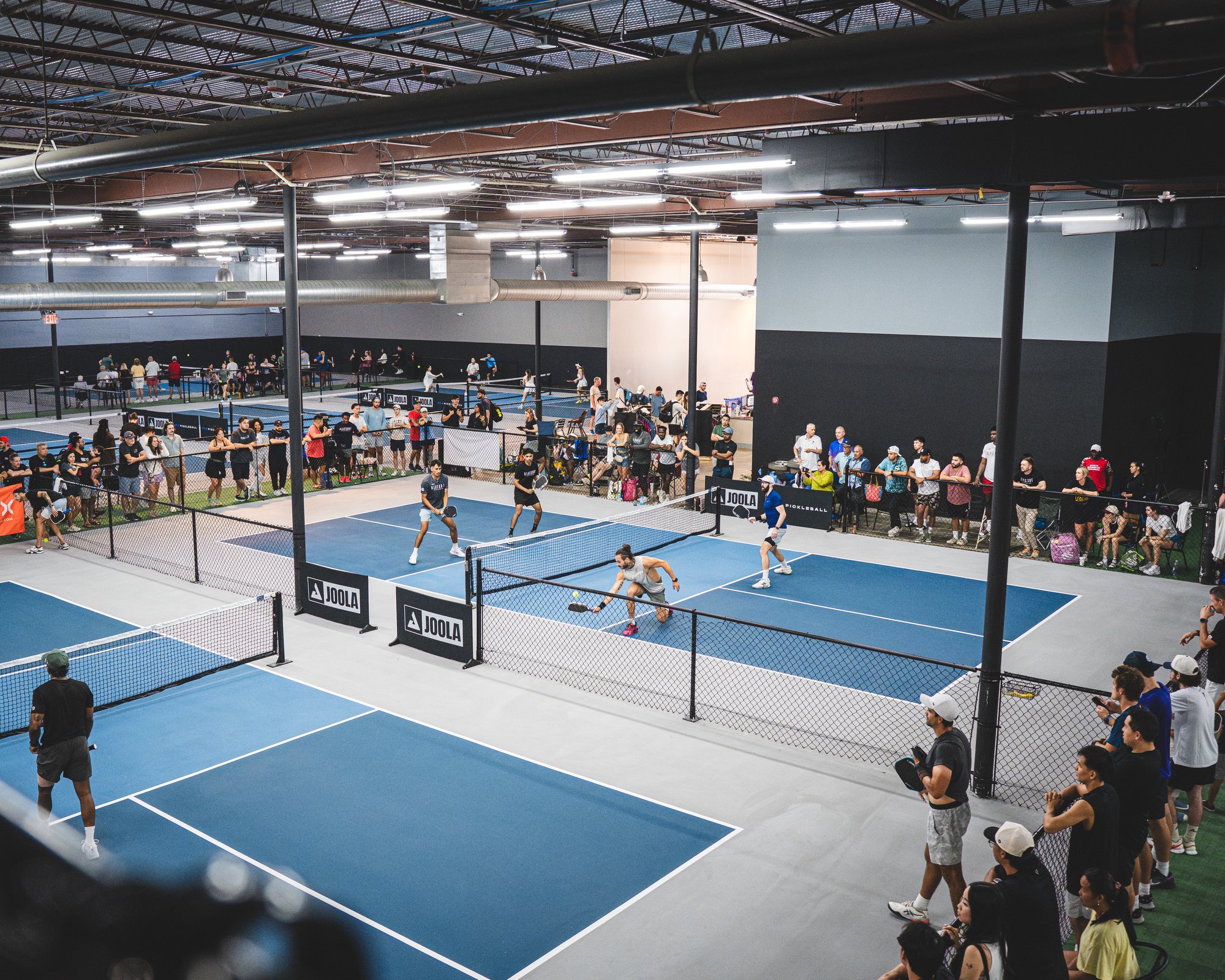
- Feel: Outdoor courts give a natural ball bounce affected by wind and surface condition, while indoor courts provide a controlled environment with consistent lighting and climate
- Pace: Outdoor sessions are often more dynamic due to variables; indoor play tends to be steadier and more predictable
- Scheduling: Outdoor availability follows weather and maintenance windows, whereas indoor courts are less susceptible to weather but may require membership or a higher reservation threshold
- Social dynamics: Outdoor play thrives on casual pick-up groups and rotating partners; indoor play often centers around established leagues and structured clinics
- Equipment and maintenance: Outdoor play puts more emphasis on weather-ready gear and surface upkeep; indoor play zeros in on court cleanliness and consistent nets
The human element in the calendar
Beyond the mechanics, the outdoor play calendar is a social artifact. It reflects a community that believes in shared spaces and the idea that sport should be something you arrange with other people rather than something you squeeze into a schedule alone. I can tell you about a winter morning when a duo of players who had never met before ended up forming a weekend doubles team after a casual exchange in the parking lot. They found a rhythm that turned into a recurring weekly pair, their play improving in tandem with the calendar’s stability.
Then there are the families who treat Era Pickleball as a weekend ritual. A parent and a tween might show up on a Saturday morning, not just to run drills but to socialize with other families who have similar goals: to move more, to learn the sport, and to share the experience with others in the community. The pickleball courts near me calendar becomes a communal repository of opportunities rather than a sterile listing. It’s a tool, yes, but it’s also a social technology in the most practical sense: a way of orchestrating dozens of individual desires into a shared, livable schedule.
One trade-off worth noting is the balance between fixed programming and spontaneous play. A club that locks into rigid time blocks may provide reliability, which is valuable, but it can also dampen the sense of freedom that makes outdoor play compelling in the first place. Era Pickleball navigates this tension by offering a spectrum: reserved blocks that guarantee space for organized groups, a robust open-play framework that invites casual participation, and a handful of partner clinics or lesson blocks that ensure players can deepen their skills without the pressure of a tournament environment.
Lessons drawn from real sessions
If you want a practical lens for how this calendar translates into daily life, consider the following patterns that consistently emerge from a year of outdoor play at Era Pickleball:
- The most engaged players don’t just show up; they plan. They check the calendar midweek, confirm their anticipated partners, and shape their weekend around a dependable core block. This predictability keeps motivation high and accidental gaps in play to a minimum.
- The most adaptable players become the most successful. They learn to switch partners with grace when a planned session falls through, and they embrace the communal aspect of the open-play windows. This flexibility often leads to improved shot selection because you’re not playing the same opponent night after night.
- The weather, in all its forms, teaches resilience. A light drizzle is not a sign to cancel; it’s an invitation to adopt a grip change, a different strategy, or a shorter, more intense rally format. You’ll find that the best outdoor players use these conditions to sharpen improvisation.
- The calendar’s clarity reduces friction. When a player understands that a given block is reserved for a league night, and another block is for informal open play, the friction that typically arises from misaligned expectations disappears. You save energy for the game itself, not the scheduling drama.
- Small routines compound. A five-minute warm-up on arrival becomes a ten-minute ritual. A quick dynamic stretch before the first point reduces the chance of a mid-session cramp. These micro-habits matter when you’re chasing fast rallies on a sunlit court.
Managing expectations and embracing the hybrid model
Era Pickleball’s outdoor calendar is part of a broader ecosystem that includes indoor pickleball courts too. Indoor facilities offer a different set of advantages: climate control, predictable lighting, and a consistent surface. Yet the indoor experience often lacks the open-sky drama that draws players to the park on a pleasant morning or an after-work golden hour. In practice, the most effective players treat indoor and outdoor play as two halves of a whole. They calibrate their conditioning, their footwork, and their shot catalog to the environment.
If your schedule leans toward indoor play, you can still benefit from the outdoor calendar by using it as a cross-training and social tool. The outdoor blocks can function as recovery days when you are in a maintenance phase for a more intense indoor program. The social network built outdoors frequently translates into a richer, more robust network indoors, with more partners, improved communication, and a broader skill set.
Operational realities matter. The calendar is not a magical fix for every logistical obstacle. There will be days when the park is crowded, when a local tournament gnaws the prime hours, or when a sudden storm forces a temporary shutdown. In those moments, the calendar’s value lies in its resilience. You can pivot toward a cross-training alternative, switch to a different venue, or ride out a brief lull with a friendly challenge to keep your edge sharp. The calendar helps you navigate these contingencies with less friction and more intention.
A day-to-day path to getting the most out of Era Pickleball outdoor courts
- Start with a plan for the week. Identify two or three time blocks that fit your routine and a single backup option.
- Confirm your partner or the vibe of the block. If you’re going solo, scan the open-play window and join a rotating doubles bench to meet new players.
- Dress for the day, not the idea of the day. Be ready for sun, wind, or a sudden chill and bring layers that can come off or go on quickly.
- Enter with a purpose. Decide whether you want to drill a specific shot, work on footwork, or focus on doubles strategies so the session yields measurable improvement.
- Reflect after the session. A quick note about what worked, what didn’t, and what to adjust in the calendar for the next time helps you compound progress.
The practical bottom line
Outdoor play at Era Pickleball isn’t a single resource; it is a living system. It merges real-world constraints with communal ambition. It respects the weather, the park, and the people who want to enjoy the sport without turning their lives into a full-time schedule. It rewards players who bring clarity to their own expectations: what time they can commit, who they want to play with, and what they want to achieve on the court. It also rewards patience. Availability is not a fixed constant; the calendar communicates a realistic portrait of a community that is growing with the sport and learning to balance competition with collaboration.
For players just starting out, the calendar is an invitation to learn the rhythms of outdoor play. It’s a chance to observe how a court number can become a social thread, how a single rally can spark a friendly rivalry, and how a well-spent afternoon can become a memory you carry into the next season. For veterans, it’s a map of continuity, a way to preserve rhythm in the face of changing schedules, and a reminder that the best games often emerge from the simplest blocks of time when the right partners show up and you’re ready to respond with intent.
In the end, Era Pickleball’s outdoor calendar is more than a scheduling tool. It’s a social contract that says we will share space, time, and energy to chase a simple idea: the joy of a well-played point, the thrill of a close match, and the satisfaction of finishing a session with a plan for the next. It’s a calendar built with the same care that a court is laid out with, lines chalked with the precision of years of practice, and nets tuned to snap with the crisp pop of a well-hit return. It invites you to show up as a player, yes, but also as a citizen of a community that has chosen to grow together through sport, sun, wind, and shared lines on a park surface.