Pickleball Academy Era Pickleball: Athlete Mindset
A long, glassy court, the soft thump of a ball on paddle, and a training room that smells faintly of chalk and sweat. This is the kind of sensory mix that rewards patience and repetition. Era Pickleball, a pickleball academy with a clear philosophy, makes room for both technique and the mental edge that turns drills into consistent wins. If you walk through the doors at era pickleball, you quickly sense that the focus is not simply on getting better at the game. It is about becoming the type of player who shows up prepared, processes feedback, and carries a competitive calm from warm up to match point. The mindset is the hinge that connects skill to performance under pressure.
The first thing to know about Era Pickleball is that the academy treats practice like a disciplined sport practice rather than a casual pickup scene. The ownership and coaching staff bring a blend of competitive experience and instructional rigor. They understand that the sport rewards precision and pace, but it rewards even more the player who can regulate emotion, manage energy, and make smart decisions while the crowd grows louder. A mindset that acknowledges both the science of movement and the art of focus tends to produce players who improve not just their technical range, but their capacity to handle the inevitable ebbs and surges of a tournament life.
What makes Era Pickleball distinctive begins with its culture of feedback. At a center dedicated to development, every drill has an intention and every drill is followed by reflection. Coaches observe not only where the ball goes, but why it goes there. They watch for habitual misreads of pace, footwork that erodes balance, and the way a player chooses between risk and control. The point of feedback is not to shame or label, but to illuminate small choices that accumulate into big gaps over time. The athlete mindset here is a commitment to honest evaluation and incremental improvement, a philosophy that aligns well with a sport that rewards precision and adaptability.
A practical reality for anyone training at Era Pickleball is the way the center translates modern sports science into daily routines. There is an emphasis on efficient practice, not just longer practice. Players learn to structure sessions so that each minute on the court matters. They understand how warm ups should prime the kinetic chain for fast direction changes and how cool downs help with recovery and future performance. The coaching staff integrates data-informed cues with feel for the court, a combination that helps players trust their instincts while remaining grounded in technique. You feel the balance between analytics and intuition, a balance that becomes part of the athlete’s own internal narrative.
The center also positions itself as a hub for visit website community and accountability. It is one thing to practice hard in a private workout or a single session with a personal coach; it is another to train within a network that shares schedules, goals, and progress. At Era Pickleball, athletes often strap on performance trackers, note their daily spark and fatigue levels, and compare notes with teammates who understand the grind. This social dimension matters. It creates a subtle pressure to bring your best, but it also provides a support system when the body pushes back or when motivation dips. In real terms, the mindset work is inseparable from the social fabric that encourages players to show up on days when the bed feels heavy and the drapes of doubt want to close in.
The athlete mindset at Era Pickleball rests on a few core pillars, each reinforced through practice design, coach feedback, and competition simulations. The first pillar is goal clarity. Players are guided to articulate concrete, observable targets for the season. These targets might be functional, like reducing unforced errors on forehands or improving shot selection on transition balls, or they might be strategic, such as mastering a new out-of-system shot in a match scenario. The trick is to anchor these goals to measurable outcomes so that effort translates to a visible delta in performance. When a player steps into the court with a precise objective in mind, their energy focuses on the steps necessary to reach it rather than drifting into general improvement.
A second pillar is the relationship to risk. Era Pickleball teaches players to evaluate risk not as a binary choice between safety and aggression, but as a spectrum with calculated steps. The environment of a match does not allow for perfect control, so the mental grammar shifts toward accepting controlled uncertainty. Athletes learn to read the scoreboard, the opponent’s tendencies, and their own physical state to decide when to push and when to protect an advantage. It is not about being fearless, but about being proactive with the data you have and the energy you can spare.
Third, there is the discipline of routine. The program encourages micro-habits that compound into reliable performance. A simple example is the preparation sequence before each point: ball bounce, stance check, light pivot, calm exhale, and a fast recoil to ready position. These small rituals provide a sense of stability under pressure. They also reduce cognitive load during the chaotic moments of a rally, freeing up bandwidth for higher-level decisions. In era pickleball, routine is not a bland repetition; it is a scaffolding for peak performance, a step-by-step map that keeps players grounded when the tunnel vision of a close game takes over.
The fourth pillar centers on recovery and resilience. Training hard demands recovery that supports sustainable progress. The academy places emphasis on sleep, nutrition, hydration, and movement quality. Recovery practices are not afterthoughts; they are woven into the fabric of the week. Athletes learn to monitor soreness, adjust load, and use mobility work as part of the daily plan. The mindset here values resilience not as a flaw the body must endure, but as a skill to cultivate. It is about understanding the body’s signals and honoring them without losing the edge of competitiveness.
One of the more day-to-day realities of training at Era Pickleball is the way sessions flow. A typical day might begin with a dynamic warm up designed to awaken the hips, ankles, and shoulders. Then, coaches guide players through a sequence of drills that emphasize decision-making in live rally situations. The ball doesn’t simply beeline toward a target; it demands interpretation and quick adjustment. A good drill tests two or three adaptive moves at once: distance control, paddle angle, and the ability to switch from aggressive to defensive posture instantaneously. The best players begin to respond to this complexity with a calm rhythm. They do not overreact to misplays; instead they translate errors into rapid, actionable corrections.
In the cafeteria of practice, there is room for moments of quiet focus that resemble meditation more than training. A player might stand at the baseline a moment longer after a point, letting breath slow, muscles reset, and attention reframe the next exchange. It is in these micro-pauses that the athlete mindset shows its depth. The ability to reset quickly, to avoid spiraling into frustration after a bad point, is as critical as any backhand slice. The sport demands that you stay present with the match in front of you rather than projecting outcomes onto the scoreboard. A season is long, and games accumulate. The player who preserves calm across a tournament’s scattered days often wins the most crucial moments.
Era Pickleball’s approach to court rental and facility access also influences how athletes think about development. The center offers a range of options for players who want to train with flexibility. For regionals and league builders, court rental becomes a practical tool for assembling consistent practice blocks. For serious competitors, reserving time on Era Pickleball’s courts allows for high-velocity, pressure-filled practice that mirrors tournament conditions. The ability to schedule sessions at times when energy and focus align makes a tangible difference in progress. The center often pairs court time with analytics blocks, where video review and stat tracking amplify the learning loop. This pairing helps athletes connect intention with tangible improvement rather than letting practice drift into repetition without feedback.
The surrounding community around era pickleball is more than a backdrop. It is an ecosystem of peers who share the same ambitions and who can push one another toward sharper performance. Coaches encourage pair workouts, even when partners have different skill levels. Training with someone who presents a different pace or a contrasting style expands a player’s tactical repertoire. The social dimension matters because it creates a corridor of accountability. When a teammate calls out a habit that leads to a misread, the observation lands with a practical sting that motivates correction. When a peer notices improvement, the smile that follows signals meaningful progress.
For those who consider joining an academy, one practical concern is transition. The leap from casual play to a structured athlete mindset can feel abrupt. Era Pickleball recognizes this and tends to ease players in with a staged plan. In the first weeks, newcomers get a baseline assessment. Coaches look at footwork patterns, shot selection under pressure, and how well the player recovers after mistakes. Then the plan unfolds gradually, layering advanced concepts as confidence solidifies. It is not about piling on information; it is about layering the learning so it sticks. The most successful athletes are those who can absorb a handful of new cues at a time, apply them in practice, and begin transferring the changes into match play.
In the longer arc of a player’s development, the mindset cultivated at Era Pickleball becomes a portable asset. The skills of focus, composure, and adaptive decision making translate beyond the court. Those attributes prove valuable in the classroom, in the workplace, and in everyday life where timing and restraint can determine outcomes. The ability to reset after a mistake, to recalibrate a plan on the fly, and to stay coachable under pressure are universal advantages that carry forward long after the ball stopped bouncing.
To get a sense of the daily texture, imagine a typical week on the courts. A Monday session might emphasize open play with targeted drills, a Tuesday practice centers on transition shots from the baseline into the kitchen, and a Wednesday cools the intensity with partner drills that emphasize shot variety and placement. Thursday could be a video analysis day, where players compare two matches to identify patterns in opponent behavior and personal gaps. Friday focuses on a simulation of a tournament day, with the clock ticking through warm up, match play, and post-match reflection. Weekends might be reserved for scrimmages and community events, where the emphasis shifts from isolated technique to the flow of multi-point rallies and strategic pauses.
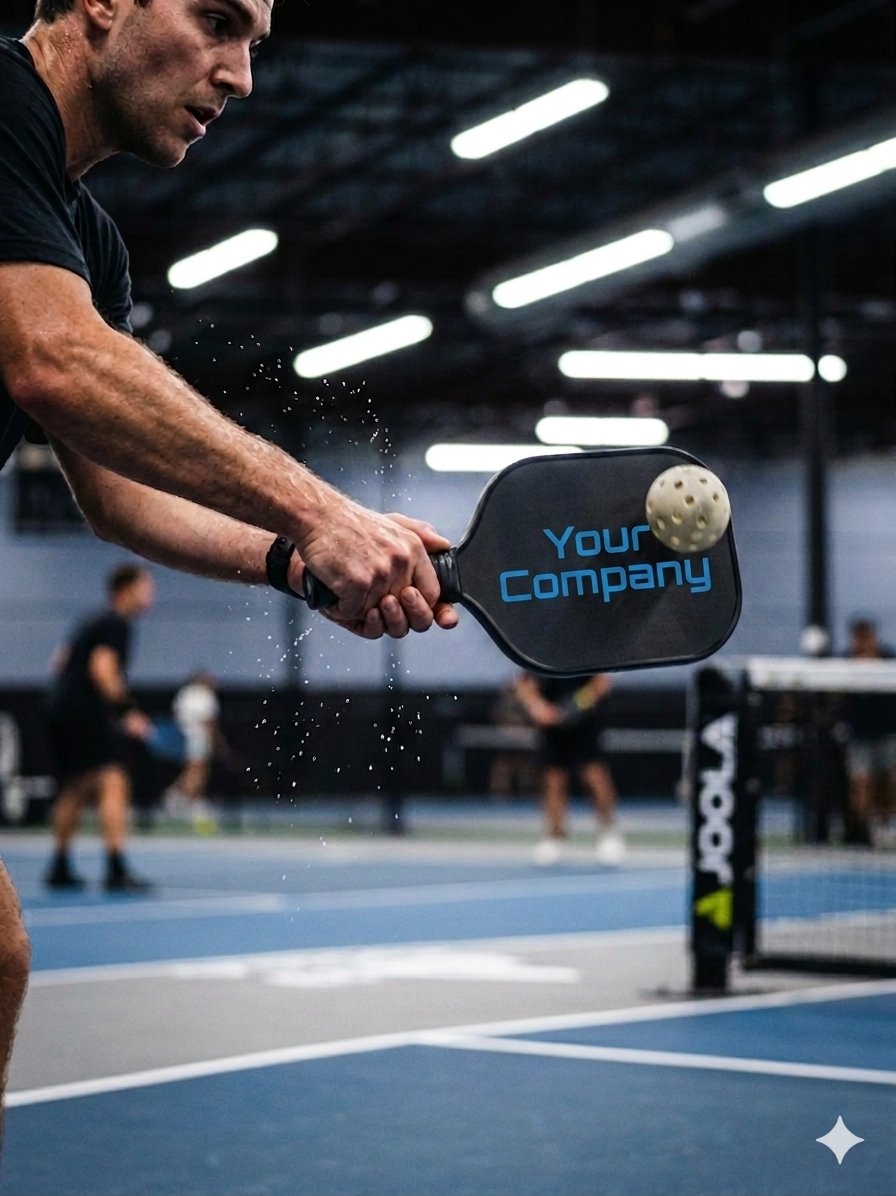
The quality and longevity of improvement in this setting depend heavily on honest self-reporting. Athletes are encouraged to keep a simple daily log that tracks energy level, focus, and a quick note about what felt good in practice or what felt off. The log is not a confession; it is a compass. Coaches read these notes with care, looking for patterns that reveal fatigue, overtraining, or mental blocks. If a player sees recurring issues in a certain shot or position, the coaching team will adjust the plan to prevent stalling momentum. In the end, the most meaningful change often comes from small, sustainable adjustments rather than sweeping overhauls.
The question of cost and access, naturally, matters to families and players. The center’s pricing reflects a commitment to a professional training environment while recognizing the realities of amateur and semi-pro pathways. Some players invest in a package that includes on-court time, video review, and a handful of targeted coaching sessions each month. Others opt for a la carte court rental when schedules demand flexibility. In either case, the value proposition rests on the balance between structure and freedom. The academy provides a scaffold that accelerates learning, but it expects athletes to meet it with discipline and curiosity.
Era Pickleball also understands that the path to mastery is not linear. There are days when technique clicks and days when the body feels heavier and the mind drifts. The difference between players who endure and those who drift away is not merely talent; it is the willingness to show up, to accept feedback, and to adjust course with humility. The environment supports this mindset by celebrating progress in all its forms. When a player finally executes a difficult shot under pressure or survives a brutal rally with composure, the praise earned is not loud but precise. It reinforces the exact behavior that led to success and makes it easier to reproduce in future battles on the court.
In reading about Era Pickleball, a curious observer might ask what this training philosophy misses or where it faces limits. As with any athletic program, the most intense gains tend to occur when players balance skill development with physical maintenance. Injury prevention, mobility work, and respect for early signs of overuse are essential. The academy does a decent job of integrating these concerns into the weekly schedule, but real-world wear and tear will always demand personal responsibility from athletes and families. The edge, then, is not a flawless system but a transparent one—one that makes tradeoffs explicit and invites players to participate actively in their own development.
An important nuance is how the academy frames competition. It is not about guaranteeing victory, but about cultivating the conditions for peak performance when it matters most. Competitions, scrimmages, and league play are used as testing grounds for the growth achieved in practice. The mindset shift required here is subtle but powerful: perform with intention in practice so that matches feel like controlled experiments rather than high-stakes improvisation. The more a player trusts the training and the feedback loop, the smoother the adaptation when the scoreboard starts ticking and the crowd shifts from background noise to a living pressure.
If you are considering Era Pickleball as a hub for growth, there are a few indicators that matter beyond wins and losses. The first is consistency of attendance and effort. The real athletes show up on the days when motivation is scarce and energy is low. The second indicator is the quality of self-regulation during and after points. Players who can acknowledge a mistake, reset their mind, and re-enter the rally with a clear plan tend to sustain improvement longer. The third indicator is the depth of the learning network inside the academy. A robust environment invites questions, offers mentorship, and creates opportunities to observe peers who play with contrasting styles. This network often becomes a hidden accelerator, pushing players beyond their comfort zones through exposure to new patterns and corrective feedback.
To close this reflection, consider how the athlete mindset at Era Pickleball shapes the future for a player who commits to it. The journey is not a straight path from novice to champion; it is a mosaic built on daily decisions. The small acts—tracking a shot pattern, choosing a risk at the right moment, recovering with intention, listening closely to feedback—accumulate into a level of performance that cannot be faked. The hallmarks of growth are not glamorous moments on match day but quiet, persistent improvements visible in the daily routine. The gears of the mind, tuned through specific practice and intelligent coaching, begin to quietly govern the body’s responses in the most stressful exchanges.
If you want a concrete sense of how the center operates within the broader pickleball ecosystem, observe the intersection of court rental, coaching, and community events at era pickleball. The facility is designed to maximize practical access while preserving the intensity of deliberate training. Coaches calibrate drills to mimic game situations, ensuring that players learn to navigate the nuance of real rallies rather than rehearse perfect sequences in isolation. The court rental system is more than a scheduling tool; it is a way for players to commit to repeated exposure to high velocity exchanges, to test a new tactic, or to simply lock in the routine that sustains their above-average performance.
A final note on the long view. The athlete mindset cultivated at Era Pickleball does not vanish when a player leaves the court. It travels with them into every practice, every gym session, and every competitive scenario they encounter. The discipline of setting precise goals, embracing feedback, and maintaining balance between aggression and control becomes a universal toolkit. It equips players to handle the unpredictable rhythm of a sports season—the sudden shift in weather, the unexpected opponent, the moment when a plan must be rewritten on the fly.
Two practical takeaways for players and families considering Era Pickleball:
- Start with a clear baseline and a modest, testable goal. Choose a single area to improve in a given month, then track progress with objective measures. This approach keeps the effort focused and makes the training feel tangible rather than overwhelming.
- Build a simple pre and post practice routine that channels energy and clarifies intent. A compact ritual before practice and a reflective moment after can anchor growth in a way that outlasts the memory of a single session.
In the end, the value of an athlete mindset at Era Pickleball lies not in a single breakthrough moment but in the steadiness of daily habits, the readiness to adapt when a plan falters, and the humility to keep learning under pressure. The academy does not just teach you to play better pickleball. It teaches you to show up as the kind of competitor who can sustain improvement across a season, across the year, and across the arc of a long sports life. The court is a classroom, the ball is the instrument, and the mind is the conductor guiding each stroke toward deliberate, meaningful progress. For players who want to insist on depth and durability in their game, Era Pickleball offers more than instruction. It offers a framework for becoming a complete athlete, inside and outside the lines.